Posts on the Andean Cosmovision

Year: 2011 (Page 6 of 8)

Lesson of the Mask

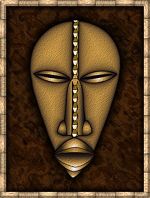
Sacred Dan MaskJoseph Campbell, who in my view was the world’s greatest comparative mythologist, wrote a book about the role of masks in ancient ceremonies (The Masks of God: Primitive Mythology). He was interested in the experiences of people who participated in sacred rituals where a performer wore a mask which portrayed her or him as a deity. The people at the ceremony often knew the identity of the person wearing the mask, it may have been–for example–their uncle, so what did they believe about the person when he was wearing the mask in the ceremony? Did they believe that in the ceremony the mask actually transformed him into the deity or did they see him as representing the deity in a metaphorical sort of way?

Campbell argues that the people at these ancient ceremonies did not take either perspective. Those who believe that the mask transforms the person into a deity, the true believers–and this would include those who believe that their mythology is literally true–do not belong at the ceremony. On the other hand the spoil-sports, the skeptics for whom the mask has no power to transform its wearer into a deity, for whom the ritual must–at best–represent a metaphorical transformation, are also not invited. The statues of guardians–warriors, dragons, demons–who flank the entranceways into the ancient ceremonial sites are there to keep out what today we might call the ‘religious mind’ as well as the ‘scientific mind’. The people at these ancient ceremonies, Campbell believed, took a third option, experiencing the ritual as neither literally true nor essentially metaphorical. This third option involves moving out of the realm of logic and immersing oneself completely into the realm of the play, the realm of ‘as if’.

The anthropologist Gregory Bateson (who I think was one of the greatest minds of the 20th Century) had something similar to say.

“[In the 1500’s] in Europe, many Catholics and Protestants were burning each other at the stake, or were willing to be burned, rather than compromise about the nature of the bread and wine used in the Mass. The Catholics said that the bread is the body of Christ and the wine is the blood, the Protestants said, on the other hand, that the bread stands for the body of Christ and the wine stands for the blood. The point is not to say that one side is better than the other, but that the argument is one of fundamental importance in understanding the nature of the sacred and human nature…Now it is my suspicion that the richest use of the word ‘sacred’ is that use which will say that what matters is the combination of the two, getting the two together. And that any fracturing of the two is anti-sacred. The Catholics and the Protestants were equally anti-sacred. The bread both is and stands for the body.” (A Sacred Unity: Further Steps to an Ecology of Mind)

Bateson goes on to say that the path to the sacred, to getting to the place where the bread both is and stands for something, involves leaving what he labels ‘prose thinking’ (and that I label as ‘the intellect’) and entering into ‘dream thinking’, for in dreams our experiences are not labelled as true or false, or as literal or metaphorical.

What both Campbell and Bateson are talking about, I believe, is ‘intent’ (please see the post ‘Intent‘).

Photo of the Dan mask courtesy of the ArtyFactory.

Share... Facebooktwitterredditpinterestlinkedinmail

Intent

Intent–as the term is used to describe how to carry out the Andean meditations–is a fascinating thing. Intent is like an apocheta (a Quechua term), a doorway into another type of energy, into another way of experiencing the world. On the surface intent is easy to understand, but as we go deeper into what intent really is it becomes more and more mysterious.

Sincere Pretending. Intent is the active ingredient of the meditative-like processes that constitute the Andean Cosmovision. The meditations include some pretty strange (from a Western perspective) instructions, such as “connect your energy to the energy of the river” (part of a river-side meditation that we will cover in a later blog). The way you actually accomplish this is with intent. Intent can be thought of simply as ‘sincere pretending’. Sincerely pretend you are carrying out the various steps of the meditations and experience what happens. This level of understanding intent is all you need to explore the vast experiential realm that is available through the Andean Cosmovision.

There are, however, deeper levels to intent, and if you are interested in peering more deeply inside then keep reading. Let’s begin by considering both parts of ‘sincere pretending’. First note that it involves pretending, this takes us outside of the realm of having to distinguish between what is true and what is false, to a place where we don’t have to be either skeptical or gullible for there is nothing to believe (see Why a Swan). Second, the pretending is to be sincere. Sincerity itself is an interesting thing, why is it that a computer cannot be sincere (sincerity just doesn’t seem to apply) while a human being can? The answer is that sincerity involves something more than thought, sincere pretending is more than just an intellectual exercise. Sincerity has to do with the heart, and through the heart something deeper.

Intent vs. Intention. The Andean mystic don Americo Yabar draws a distinction between two ways of acting in the world. This distinction is sometimes translated into English as the difference between intent and intention (the difference don Americo is expressing is not reflected in how the terms are normally used in English).

Intent is powerful, intention is not. If I have the intention of going to the store it is really just a thought, maybe I will go to the store, maybe I won’t, it rather depends on several factors including whether I really want to go or not when the time rolls around. With intention there is less than a 100% commitment to the act.

Intent, on the other hand, is a different animal. A friend of mine grew up in Cusco, Peru. One day, when he was a child, he decided to skip school and wander around the city instead. He was walking down a street when he saw his father. Now his father was a very powerful, and at times, a very fierce man. My friend ducked down a side street and began to walk more quickly. He was afraid to turn around to see if his father was following him but he could feel his father catching up with him. He turned into another street and found himself in a dead end with high walls all around. Just before he heard his father shout his name he scampered up over the walls and down into another street. It was an impressive feat that he accomplished with ‘intent’. The next day he went back to the same spot with the intention of climbing that wall again, but he simply could not do it, it was far too difficult a climb.

This story reminds me of other stories, of mothers who lift cars off of their children, or of some less impressive (but to me still amazing) events in my life when my body reacted with grace to some situation while my mind stood by and watched as my actions unfolded. So what creates, or allows, intent? I believe it is a lack of interference by the mind, by the intellect. Intent is available when the mind is not having doubts about whether the act is possible, when the mind is not considering how the act (or the actor) may be judged by others, when the mind is not thinking about the future or the past or of anything that is not present in the moment.

Carlos Castaneda writes of times when we act with ‘controlled abandon’, a very nice term and one that I believe is the same thing Americo is talking about when he speaks of intent. The questions that ‘controlled abandon’ bring to my mind are ‘exactly what is being abandoned?’ and ‘exactly what then is in control?’ What is abandoned, I believe, is our own intellect, our thinking, and its normal control over our acts. One of the most powerful aspects of the intellect is our ego. Our ego consists of all of the thoughts we have about who we are, our story, our identity, our self-concept, our beliefs about ourself. The ego stands in contrast to who we actually are, which is beyond any thoughts we have about ourselves. So if the intellect and its ego are abandoned in acts of intent, who then is in control of our ‘controlled abandon’? Some aspect of our being that is beyond thought…

The Cosmos. This brings us to something that Americo told me, rather in passing, he said that our intent is that aspect of ourself that is the infinite Cosmos.


Share... Facebooktwitterredditpinterestlinkedinmail

Bellybutton to Pachamama

Intro: This is the first of many meditations I will be sharing on this blog. I call them ‘meditations’ only because I can’t come up with a better term. In speaking of them I often refer to them as ‘meditative-like processes’, but that is a rather awkward label. I have heard don Americo refer to them as ‘passes’, but that term has never made any sense to me. What they are in essence are ways of working with energy (or spirit). If you haven’t yet, I recommend that you read the post Andean Cosmovision: The Basics and perhaps also the post Paqos: Shamans or Mystics.

About Intent: These meditations involve following some pretty unusual instructions, such as “open your energy at the top of your head and let the energy of the Cosmos flow into your body” (part of a meditation I’ll be sharing in a later post). How do you go about doing something like that? The answer is simple, you do it with intent. Now intent is a pretty interesting thing and worth exploring. To start off with think of intent simply as “sincere pretending”. That’s all. You accomplish the various steps of the meditations by sincerely pretending that you are doing them, that is sufficient to open the door to the experience that becomes possible through the meditation.

Process: This is a very simple, very special meditation. It is one of the two meditations about which I’ve heard Americo say that if we were to just do this one meditation on a regular basis it would have a profound effect on our lives. My ears perk up when I hear something like that.

First, I recommend before all of the meditations that you take a moment before you start to notice how you feel, to get a sense for what your energy is like before you begin, so that you can compare it to how you feel after the meditation.

Here is how to do this meditation. Lay on the ground on your stomach and pull up your shirt far enough so that your bellybutton (navel) is in physical contact with the Pachamama (that great Cosmic Being who is our mother the planet Earth). What you do next depends upon whether you want to get rid of some undesirable energy, or bring the Pachamama’s energy into yourself, or both.

If you have some energy you would like to get rid of (e.g. stress, anger, depression, sorrow, anxiety), then, using your intent (sincere pretending) let that energy flow from you and into the Pachamama. Don’t be concerned about giving this energy to her, it is not like pollution, the Pachamama takes this energy and recycles it into purer energy that is then released into the Cosmos. This is one of her great gifts to us. With your intent, open your energy field around your bellybutton and feel this energy flowing out of your body and into the Pachamama. If you sense that some of it is not leaving–perhaps it feels stuck in some particular part of your body–then you can use your stomach muscles to press your bellybutton to the Pachamama with a few gentle pushes, this can help. You can also, with your intent, request that the Pachamama send her energy into you through your bellybutton to gently draw that energy from you. Do this for as long as it takes to feel that the undesirable energy has left you body. Then you are either finished or you can also go on to the next step.

If you would like some energy from the Pachamama (e.g. tranquility, love, ease, harmony) you can use your intent (sincere pretending) to open your energy field at your bellybutton and invite her to send that energy into you. Another option is to invite her to send her energy into you with the simple intent that she bring your energy into harmony with hers. Getting your energy into harmony with that of the Pachamama is a very beneficial thing for you to do, it helps move us out of all of the weird states our interaction with our social/political world can get us into, and it also helps us stay in harmony with the changes the Cosmos is going through. Bringing in her energy can be facilitated by gently drawing in your stomach muscles a few times, as if pulling her energy into you. Continue until you feel complete.

When you are finished with the meditation take a few moments to notice how you feel now, what your energy is like after the meditation. The difference between how you felt before the meditation and how you feel after it is the true ‘meaning’ of the meditation.

That is the process, and–as is typical of the Andean meditations–it is very simple but the effects (particularly when carried out repeatedly over a long time) can be quite beautiful. Connecting our energy with Nature and the Cosmos is what these meditations are all about. This is the realm of salka, our natural undomesticated energy.

Context: The Andean meditations are the outward form of something deeper, a shift in our relationship with the Cosmos. It is within this relationship that the “magic” of the Andean meditations arise, but this is not how we might normally think of magic for it is not a way to manipulate or harness the powers of Nature. It is instead something that arises within a relationship of love and respect. The context of the Andean meditations, where their benefits arise from and what the meditations help nourish, is a loving and mutually supportive relationship with Nature and the Cosmos. The active principle of this relationship is ayni.

About Ayni: Ayni is the Andean principle of reciprocity, a balancing of giving and receiving which reflects the underlying dynamics of the Cosmos. As you engage in this meditation with the Pachamama, well, I can’t imagine that a deep sense of love and gratitude for the Pachamama won’t arise. To follow the Andean path step into and nourish this relationship, balance your relationship with the Pachamama, give something in love to her in return. Quite simply, with intent, express to her your heart-felt gratitude. Occasionally, as a simple form of ayni, pour a few drops of wine or other alcohol onto the Pachamama with the intent that it honor her and nourish her (and thus give some energy back to her). Remember, this is not a bribe or a payment for services rendered, it is instead like giving flowers unbidden to a loved one. We will be covering more formal and elaborate offerings (called despachos) and taking a deeper look at ayni in later posts. 

[Added later] Please see the subsequent post on ayni.

Source of the Meditation: Don Americo Yabar (don Américo Yábar).

Share... Facebooktwitterredditpinterestlinkedinmail

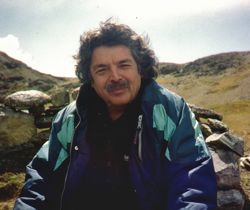
Don Americo Yabar

Don Americo Yabar

Don Americo Yabar

Don Americo Yabar (don Américo Yábar) is a mystic from the Andes of Peru. Since childhood he has been studying under and working with some of the greatest paqos (mystics/shamans) of the Andes. Having also received a college education in Europe he serves as a chakaruna, a human bridge of energy that connects the energy of the Andes with that of the West.

I first met don Americo in 1994 at a workshop in the deserts of Southern Utah. I subsequently went to several more of his workshops and then began to travel to Peru to study with him there. While I have been in Peru he has also arranged for me to work with other paqos and healers of the area, and in general has provided the opportunity for me to connect with the Andean people at a very heart-felt level.

There are some things I would like to share about Americo that reflect not only upon him but also, and perhaps more importantly, upon the basic qualities of the path that he exemplifies, the path that attracted me, that I am attempting to nourish with the Salka Wind site, and that perhaps is attractive to you as well.


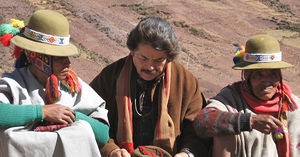
Don Americo Yabar and Q'ero Paqos

Don Americo Yabar & Q'ero Paqos

What has drawn me to associate with Americo is (among other things) his integrity, his love, and his joy of life. ‘Walking your talk’ is for me a minimum requirement for a path with a heart. Americo not only walks his talk, his walk is even more expressive and impressive than his talk (and as a mystic who is also a poet he talks very beautifully indeed). Anywhere I go with Americo in the Andes, from Cusco to the smallest village, people come running up with smiles, or lean out of a window and wave in delight to see Americo. Being with him is an instant ticket to having the opportunity to interact with the villagers at a heart-felt level, this is an opportunity I always embrace, and is an important part of the ineffable beauty and power of my experiences in Peru. While Americo is an impressive mystic in the traditional sense (whatever the hell that means) the path he walks shows up most profoundly in the way in which he interacts with the people of Peru, and does what he can to help them get by, and works to nourish their roots in their traditional culture.

For all of that, Americo is “just this guy, you know?” (description of Zaphod Beeblebrox, galatic president, in Douglas Adams’ Hitchhikers Guide to the Galaxy), not a Saint, not a guru, just a very human guy. I find this attractive about the path as well, as we travel it we don’t turn into Americo Yabar clones, we instead begin to blossom into who we uniquely are, we don’t rise above our humanity, we begin instead to express its true nature.

Don Americo and Oakley Gordon in Peru

Don Americo and me in Peru


Share... Facebooktwitterredditpinterestlinkedinmail

Andean Cosmovision: The Basics

One overriding factor to take into account when contemplating the Andean Cosmovision (view of the basic nature of the Cosmos) is that it is fundamentally different than that of Western* culture. This means that we can’t simply force their ideas into our own conceptual categories. The temptation to do so, however, is strong and rather automatic for we are accustomed to making sense of new things by relating them to what we already know.

We in the West essentially have two ways of viewing the basic nature of reality; through the lens of science or through the lens of (Western) religion. While these two approaches have some important differences they both arose within our culture and were built upon the same philosophical foundation. The indigenous Andean culture, however, does not share that foundation. Neither science nor religion have a counterpart in the Andean Cosmovision, and what they have (for which we have no corresponding terms) has no counterpart in our Cosmovision (or we would have corresponding terms).

Imagine, if you will, a view of reality that was not influenced by the Bible (where God as the creator stands outside of the creation and who made humans, alone of all the species, in His own image). It was not influenced by the classic Greek philosophers who emphasized the intellect as the highest form of knowledge, nor was it shaped by Descartes (the ‘Father of Modern Philosophy’) who proposed that reality consists of two separate realms, a transcendent realm of spirit and mind and a physical realm of mindless energy and matter. If we wish to explore the Andean Cosmovision we need to let go of our normal way of thinking about the world and approach it with room for it to be something brand new, we need to be a more accommodating (letting new information change how we view the world) and less assimilating (making new information fit how we already view the world).

The Andean Cosmovision is mystical in its essence. Mysticism is the belief that words (including beliefs) are, at best, signposts or blueprints for how to connect directly with the sacred underlying nature of reality, and that it is that connection with the Sacred–not the words or beliefs–that is of fundamental importance. The Andean Cosmovision is not primarily about their beliefs, it is about the experience of reality that becomes possible with these beliefs, it is about the relationship with Nature and with the Cosmos that becomes possible with these beliefs. Neighboring villages in Peru differ somewhat in what they believe, as do paqos (mystics/shamans) within the same village, but those differences are irrelevant to being a paqo, for what matters is what they can accomplish through those beliefs. What they can accomplish arises from the loving and mutually supportive relationship with Nature and the Cosmos that is made possible and nourished by their Cosmovision.

Here is my representation of the Andean Cosmovision. Imagine the Cosmos as consisting solely of filaments of energy organized into a tremendous three dimensional web. Where the filaments come together to form a bundle or a node is what we experience as an object. You are such a node, as am I, as is my coffee mug sitting here by my keyboard as I type. There are some important consequences of this world-view:

  1. Everything in the universe is part of this web of filaments and so ultimately everything in the universe is connected to everything else. This means that a flow of information or energy or influence can exist between ourselves and anything else, including other people, the stars, the river, the wind, and the rest of the Cosmos.
  2. While these bundles of filaments, these nodes in the web of filaments, are distinct from each other they are really inseparable parts of the larger, unified whole that is the Cosmos. Perceiving the world as consisting of isolated objects and experiencing our consciousness as limited to just our own being is but one way of approaching the Cosmos, the way most supported by our Western Cosmovision. The ability to actually experience the Cosmos as an undifferentiated whole is a defining goal of every mystical approach of which I am familiar, including that of the Andean Cosmovision.
  3. While the nodes that constitute humans may differ in the way the are organized from the nodes that make up a stone or a tree, we are all just bundles of filaments of energy and the differences between us is less in the Andean perspective than in the perspective of Western culture (where the gap between being a stone and being human is immense indeed). The diminishing of the difference between types of objects in the Andean Cosmovision is tied at least partially to their view that everything is conscious.

In the Andean Cosmovision consciousness is an inherent attribute of the filaments, rather than being a byproduct of an advanced nervous system . The idea that stars, trees, and even stones are conscious is so far from how my discipline of psychology views consciousness as to make the idea seem ludicrous from that perspective. Consciousness, however, from the perspective of the intellect, is and must remain the ultimate mystery of the universe, for consciousness, while it can be experienced, cannot be understood. The intellect trying to understand consciousness is like a knife trying to cut its own edge. Consciousness needs to be separated from all of our concepts about it, including what we think about thinking and about being self-aware and so on. Rather than consciousness being something of dubious reality because it is so unapproachable intellectually, it is instead the most real thing in the universe, for consciousness is that out of which our ability to think emerges. But I digress.

Of all the nodes of filaments in our neighborhood of the Cosmos perhaps the most important one is the Pachamama, the great bundle of filaments, the incredible spiritual Being, who is our Cosmic mother the planet earth. While I call the Pachamama a ‘spiritual’ being she is not a transcendent spirit residing in the large rock we call earth. Western culture essentially only gives us two options for viewing ‘spirit’, that spirit is transcendent (e.g. a soul that descends from heaven to inhabit the physical realm) or that ‘spirit’ does not exist. The Andes provide a third option, that the planet itself is a great spiritual being, that the sacred is not separate from the filaments but is immanent in them. The Pachamama is not the great spiritual being who resides in the earth, she is the great spiritual being who is the earth.

Other important Beings (nodes in the web of filaments) include the Apus. The Apus are the great beings who are the majestic mountain peaks. While the Apus are physically part of the Pachamama they are also Beings themselves. This is a common feature of the Andean Cosmovision. The Cosmos is one tremendous web of filaments but it does have places where the filaments come together to form a node. The Pachamama is but a node in the whole web, yet she is herself; the Apus are but part of the node that is the Pachamama but they are themselves as well; a cultivated field (called a ‘chakra’) is but part of the Pachamama, but before planting the field the villagers communicate with and make offerings of gratitude to the chakra (the daughter of the Pachamama) as well as to the Pachamama herself.

The further we go into details about the Andean Cosmovision the more variations we will find across individuals, villages, and regions of the Andes. The version I have given is my personal, inevitably Western-flavored, account but I have found that it provides good support for my exploration of this Cosmovision and I offer it to you in the hope that it may serve you as well. Before drawing to a close I want to emphasize again that the beliefs themselves are of little importance, what is important is the loving and mutually supportive relationship with Nature and the Cosmos that becomes possible within this Cosmovision, within this relationship some beautiful and magical things can occur that cannot be understood by the intellect.

The Andean Cosmovision opens us up to a whole new way of understanding reality, a whole new realm for us to explore. This blog is essentially a guidebook based upon my experiences. Treat it as you would any guidebook, understanding that while it is meant to contain useful information that my tastes, evaluations, and interests may differ in some cases from your own, and that a guidebook is no substitute for actually going there.

*The distinction of Western (Occidental) vs. Eastern (Oriental) philosophy doesn’t really make sense in this context. I need, however, a term to refer to the view of reality that arose in Europe and that served as the foundation of modern, industrial, technological society. For simplicity of expression I simply call it ‘Western’ society.


Share... Facebooktwitterredditpinterestlinkedinmail
« Older posts Newer posts »

© 2026 Salka Wind Blog

Theme by Anders NorenUp ↑