Posts on the Andean Cosmovision

Year: 2011 (Page 7 of 8)

Mamma Tuta Danced

Rose Galaxy

In the beginning was Mamma Tuta, the dark, the void. Then Mamma Tuta began to dance, and as she danced the stars streamed out of her elbows, out of her knees, out of her breasts, out of her womb, and as she danced the stars were strewn across the universe.

This post was updated on June 3, 2011 to include the photo by NASA STScl.

Share... Facebooktwitterredditpinterestlinkedinmail

Why a Swan?

Our intellect is a very important part of our existence. It’s main task is to determine what is true and what is false. This is the context of both science and Western religion. While they differ in how they determine true from false they both take on this task.

Let us consider a performance of the ballet Swan Lake. A ballerina appears on the stage dressed as a swan. This is not the appropriate context for the scientist to leap up and shout “Don’t be fooled, that is not really a swan!”, nor is it appropriate for a priest to leap up and shout out “Look, its a giant swan, it’s a miracle!”. Nor does the ballerina stop, upon entering the stage, to announce “Please do not be fooled, I am not really a swan” nor to announce “It is important that you believe that I truly am a swan”. These considerations are appropriate in the correct contexts, but there are times when something very important is going on and the judgements of the scientist and the priest are simply not relevant.

The title of this post comes from the same-titled chapter of the book ‘Steps to an Ecology of Mind’, by the anthropologist Gregory Bateson, from which this particular thought arose.

Share... Facebooktwitterredditpinterestlinkedinmail

Barefoot in the Mountains

The High Andes

Photo by Oakley Gordon

There is a song sung in Quechua by the women of the high Andes.  It begins like this:

“I walk without shoes in the mountains.  My bare feet touch the mountain.  The mountain takes pleasure in knowing my body.”

This beautiful world-view is reflected in a quote from the book Masters of the Living Energy, by Joan Parisi Wilcox.  ‘Andeans are born into a world that they believe is as conscious of them as they are of it.’

Share... Facebooktwitterredditpinterestlinkedinmail

Paqos: Shamans or Mystics?

Paqo:  Shaman or Mystic?

My work in the Peru has been with the paqos who live in the high Andes. The term “paqo” (sometimes spelled “paq’o”) does not have an exact equivalent in our culture, some people translate it as “shaman” and others as “mystic”.  It is not a particularly great choice, it is like trying to describe a bear to someone who has never seen one and having to choose between saying that it is somewhat like a large cat, or that it is somewhat like a large dog.

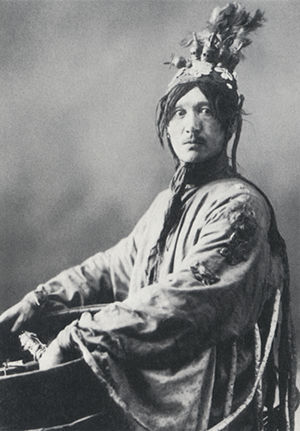
Photo of a Siberian Shaman

A Siberian Shaman : Smithsonian

The word  “shaman” comes from an indigenous culture of Siberia where it refers to people who have special powers and a correspondingly special role in their society.  The term has since been adopted by our culture and applied to people with similar roles and powers in cultures across the globe.  While this has diluted the meaning of the term somewhat still there are basic elements to being a shaman.  Shamans typically enter into altered states of consciousness through the use of  psychoactive plants, drumming, or chanting.  While in these states they may journey into spirit realms not normally accessible in everyday life, and there they gather needed information or take actions to heal people whose afflictions have their root in these spirit realms.   The role of the shaman in society centers around their ability to perform these special actions.

Mystics, on the other hand, are those who seek to know, through direct experience, the essential nature of the Cosmos.  Thoughts, concepts, and to some degree perception, are interpretations of reality, not reality itself.  The experience, for example, that we are separate entities moving through time is a product of our mind, it is our experience of reality after the mind has translated it into something that makes sense, it is not the essential ‘suchness’ of reality itself.  When we experience reality before our mind has had chance to interpret it we find an eternal, seamless whole, we find the Sacred.  This place of deep knowing is the goal of the mystic.  The various outcomes we may ask a shaman to accomplish may no longer be of importance once we take a stance beyond our mind-based ego and its needs, thus a possible distinction between a shaman and a mystic is that of power versus wisdom.

Andean Paqos

Andean Paqos : Photo by Elaine Nichols

Paqos have some of the attributes of both shamans and mystics. The paqos are mystics in that they nourish an interactive and mutually supportive relationship with the rest of the Cosmos, it is a relationship that is only possible through the direct, mystical, experience of the interconnectedness of all things.  While it is this relationship that is paramount, the relationship does make it possible to ask favors from the Apus (the great spiritual beings who are the majestic mountain peaks) and from the Pachamama (the great spiritual being who is our mother earth) as well as others, and it allows for the manipulation of the energy that underlies all existence.

Paqos differ from traditional mystics, however, for mystics tend to be solitary figures who may have found it necessary to withdraw from society to pursue their path.  To be a paqo is to be of service, both to the great beings of Nature and the Cosmos and to the community.  This service is always performed within the context of ayni, the Andean principle of reciprocity, where giving is  balanced by receiving , and receiving is balance by giving.

Like shamans, the paqos have abilities that fall outside the ken of our culture’s conceptions of reality.  These abilities, however, are not ‘powers’, they involve neither controlling nature nor being controlled by nature (neither mastery nor servitude).  They stem instead from having an experiential understanding of the essential nature of reality and from nourishing a mutually supportive and loving relationship with the rest of the Cosmos.

Paqos are not exactly shamans or mystics, or they are both.  If forced to choose (to avoid long explanations) I usually go with ‘mystic’, and thus I label what I am studying as ‘Andean Mysticism’ rather than ‘Andean Shamanism’.  Few people would know what I meant if I called it ‘Andean Paqoism’ and I am reluctant to be held responsible for introducing a term like ‘paqoism’ into our vocabulary.

There is one thing I would like to add before bringing this to a close.  One of the more engaging and fulfilling aspects of studying a new culture comes from entering a world unlike the one with which I am familiar.  If I insist (consciously or unconsciously) on fitting what I experience into the categories I have learned from my culture (e.g. categorizing paqos as either mystics or shamans) then I miss seeing what is really fresh and new about the culture, and instead of looking into a fascinating new world I end up simply seeing  a reflection of my own.  This is something that has arisen over and over again for me, finding that I have interpreted something about the Andean culture in terms of my own culture’s view of the world and have subsequently missed something of great interest and  beauty.  In what I write in this site I will try to help you learn from my mistakes.

The photo of the Andean paqos by Elaine Nichols is included with her permission.  I scanned it in from the back of my copy of a 17 year old issue of the journal Shaman’s Drum.  Unfortunately it looks like it is from the cover of a 17 year old journal.  This is a metaphor of what it is like for me when I paraphrase in my writings one of the Andean paqos with whom I have worked (primarily Americo Yabar).  I want to share something beautiful they have said and I’m afraid that in doing so I’ll add some cracks and discolorations that may be mistakenly attributed to them rather than to me where it belongs.  Still, I think facing that risk is better than not sharing something beautiful at all.

Share... Facebooktwitterredditpinterestlinkedinmail

The Crazy Ape

We humans have all the technology and information we need to turn this planet into a garden of Eden, a planet abundant with a diversity of life, healthy, unpolluted, with little disease, no starvation, and no poverty. Sometimes in my despair over the state of the world I forget the very good news that we actually have the tools we need to create such a future. We also, however, have the choice to move toward a mass extinction of species, the destruction of all the beautiful places on the planet, a steady increase in pollution, famine, war, poverty, and misery. Why does our culture as a whole select the second choice? It seems such an incredibly stupid and crazy decision. The answer to the question, and the solution for changing our direction, I believe, lie in the assumptions that underlie our culture.

A culture, or an individual, can’t operate without having some assumptions about the basic nature of the way things are. Assumptions are interesting things, they are rarely brought up to the light of day to be examined because, well, they are assumed to be true. Every culture has a set of assumptions about the nature of reality, and that set of assumptions makes it possible for a culture to be really good at some things while at the same time making it hard for the culture to be good at other things.

My Western, industrial, culture has a set of assumptions about the nature of the Cosmos that makes us really good at inventing technology. Technology contributes so much to my life; the computer I’m typing on, my telephone, electric lights, hot water at the turn of a tap, a furnace to keep me comfortably warm, a refrigerator to keep my perishable food safely cool. The assumptions, however, that make us so good at technology also make it difficult for us to do certain other things well. We find if terribly difficult, for example, as a society to head toward a future of greater beauty and health and harmony with the rest of life on this planet.

The default setting in our society–what we need to pay attention to and what we need to do to get by in our daily lives–separates us from our connection to the rest of nature, and leads us to engage in behaviors that are, largely out of our sight, killing our planet. And, time is running out for us to change our ways. It is as if we are sitting in the backseat of a car playing with (and fighting over) our toys while the car speeds towards a cliff. When we shoot off the edge of that cliff it will be too late to do anything about it, and we will take much of what is beautiful in this world with us.

The traditional Andean culture has a different set of assumptions about the nature of reality. These assumptions provide the foundation for a mutually supportive relationship with nature, a relationship that is difficult to conceive, let alone attain, with the assumptions of my culture. While certainly not conflict free, they are as highly developed at living in harmony with the Cosmos as we are at making computers and space probes. I have stood in cultivated land in the Andes that has been farmed for hundreds, perhaps thousands, of years and they feel as natural and undiminished by human activity as the National Parks in my country (the United States). The default setting for that way of being in the world–what they pay attention to and what they need to do to get by in their daily lives–reinforces their experience of being connected with Nature and the rest of the Cosmos. On the other hand, I doubt that their culture–had its development not been destroyed by the Spanish conquistadors–would have ever gotten around to inventing the internal combustion engine.

My culture has the knowledge and technology we need to head for a future of great beauty. We apparently, however, lack the heart to do it. The Andean culture, and I suspect many other intact indigenous cultures on this planet, have the heart. For a future of beauty to be possible I believe we need to bring the two together. This Salka Wind website is my effort to help make this possible.

‘The Crazy Ape’ is the title of a book written by Albert Szent-Gyorgyi. I read it when I was a teenager. The book begins by asking a question similar to the one I begin with above (although he goes a different direction with it). That question…Why as a culture do we select a future of pollution, war, poverty, and pollution when we have the means to create a future of great beauty?….has stayed with me over the years as being one of the great questions of our time.

Share... Facebooktwitterredditpinterestlinkedinmail
« Older posts Newer posts »

© 2026 Salka Wind Blog

Theme by Anders NorenUp ↑