Posts on the Andean Cosmovision

Year: 2011 (Page 4 of 8)

The Three Centers of Being (Part 2)

If you have yet to read Part 1 on this topic I recommend that you read it first. This post covers the same concepts introduced in the post The Crazy Ape (which I also recommend that you read), but with a slightly different slant that we can now consider given what we have covered in this blog.

The three centers of being (yachay, munay, and llankay), when applied metaphorically to cultures, provide a useful way of thinking about the environmental crisis we face and how we might approach it. Western society has the knowledge (yachay) and the technology (llankay) to head towards a future of greater health and beauty on this planet, not just for we humans but for the diversity of life. We seem, however, to lack the heart (munay) to do so.

The indigenous people of Peru (I am thinking specifically of the Qero because I am most familiar with them) have the heart. The Qero (also spelled Q’ero) are as developed in the munay as the West is in technology and knowledge. Knowledge about our planet’s environmental crisis and the technology to address it are crucial elements to solving the problem, but they may not be enough. The Western view of reality which leads us to being so great at technology and knowledge also tends to disconnect us at a very important and deep experiential level from Nature. The Andean Cosmovision puts us deeply into the experience of our connection with Nature, but it does not lead to the knowledge and the technology to address the problems we have created. My hypothesis is that an important step toward solving the environmental crisis would be to build a bridge between the two Cosmovisions. Americo Yabar and other Andeans are working to build a bridge from the Andes to the West. Other Westerners and I are working to build a bridge from the West to the Andes.

It might be possible to bring together experts from the various cultures, experts on the environment and technology from the West, and on the munay from the indigenous cultures, to map out the course our species needs to take. Or perhaps what we need to do is to develop and integrate the yachay, munay, and llankay within ourselves. That is part of what I am working on within myself. In this Salka Wind site I am endeavoring to give you all I can to help you follow a similar path if you would like. I say ‘part of what I am working on’, for the ‘three centers of being’ are but part of the Andean people’s vision of who we are and what our relationship can be with Nature and the Cosmos. I’ll be covering other aspects of their vision as this blog progresses.

One of the themes of this blog is ‘we can still head toward a future of greater beauty on this planet and this is one way that might work’. This was not my intent going into the study of Andean mysticism, the theme emerged as I was looking for ways of bringing my studies in Peru into my discipline of psychology, and finding that ecopsychology was a good fit. Even if it was not my original intent it is very congruent with my own values, cares, and concerns. I would like, however, to share that thinking of the Andean Cosmovision as a means to a desired end (healing the planet) does not encompass it, there is something more going on (‘means to an end’ is a very yachay thing) that will either connect with your munay through its love and beauty, or not.

There are three things in the universe: 1) those things the yachay (intellect) understands; 2) those things the yachay does not understand but eventually will (e.g. through advancements in science); and 3) those things the yachay will never understand (e.g. the munay and llankay).

Share... Facebooktwitterredditpinterestlinkedinmail

Fate of the Machukuna

There are many stories woven into the fabric of the Andean culture. It is difficult to know which stories are a pure reflection of the pre-conquest era and which were influenced by the conquerors and their religion. It is also difficult to know to what degree the stories have been shaped by the expectations and desires of those of us from the West who seek to find in the Andes what our own culture lost so many centuries ago. In addition, being an oral tradition, the stories may vary from village to village or from story teller to story teller. Here is a thread of a story pulled from a much richer and more elaborate fabric.

The indigenous people of the Andes refer to themselves as the ‘Runakuna’. In Quechua (the language of the Andes) the word ‘runa’ means ‘person’, and the addition of ‘kuna’ to a word makes the word plural. In it narrowest use ‘Runakuna’ refers to those Andeans who are the inheritors of, and who still live, the ancient Andean Cosmovision. In its widest use ‘Runakuna’ refers to the entire human race.

We are living in the age of the Runakuna, which is the age of the sun, and we are the children of the sun. Before there was the sun (Taytay Inti) there was the moon (Mamma Killa), and before the Runakuna there were the Machukuna, the children of the moon, the ‘Ancient Ones’ (‘Machu’ is Quechua for ‘ancient’). The Machukuna lived on this earth and the moon was their sun.

The age of the Machukuna ended with a ‘pachakuti’. A pachakuti is a time when space, time, and consciousness go through a great change, an overturning of the way things are. In this pachakuti the creative impulse of the living Cosmos created the sun, under whose searing light the Machukuna could not survive.

The Machukuna could see their doom approaching with the first dawn. Some fled into the hills to seek shelter in caves, some dove into deep waters, others hid in the trees. They died, the sun killed them all, but their spirits are still around.* Their spirits may be encountered in certain caves, and at night, in a bright moon, their bones are reanimated and walk about the earth. The ‘chullpas’ (small stone dwellings built by the Machukuna) are scattered about the slopes of the Andes. At sunset, when the sun has gone, the Machukuna emerge from their chullpas and warm their bones by the red glow of the evening sky.

Chullpas near Paucartambo

Chullpas in the hills near Paucartambo

With the rising of the sun and the fall of the Machukuna the Runakuna appeared and the age of the sun began. Why did the Cosmos create the sun and destroy the Machukuna? Some Andeans believe it was done for the benefit of us, the Runakuna, but many believe the Cosmos did it because it just felt like it.

This story has not come to an end. There will be more pachakutis, times of great upheaval and change, leading to new ages and new types of people who will thrive in those times. The Qero, and other Andean, paqos say that we have entered another pachakuti. One of the stories woven about the Qero is that they have abandoned their path of isolation from the West, a path they have followed since the Spanish conquest of Peru, because they have a piece of what humanity needs to make the transformation necessary to move into the next age of the world, that piece is the Andean Cosmovision.

What signs are there that a pachakuti has indeed begun? Well, from my Western perspective it seems obvious to anyone with half a yachay that our species is in a car speeding toward the edge of a cliff (of environmental disaster). From the Andean perspective, I ran across a small note in my reading about an interview with an Andean paqo several decades ago. When asked when the next pachakuti would arrive he said not to worry, that it wouldn’t happen until the snows leave the slopes of the sacred mountain Apu Asungate…

Andean Mountain with shrinking ice fields

Andean peak on road from Cusco to Bolivia. It used to be covered with snow at this time of year.


It makes a nice story, at least I like it. As with many good stories (see The Lord of the Rings) it contains some sadness for things lost. A fuller telling of the tale includes a prophecy that by opening up to the West the Qero may have doomed their own culture.

About the pachakuti, we don’t have to be driven by fear of cataclysm, we can also be drawn by love and beauty. In this story if humanity survives it will be by becoming more in touch with all of who we are, all of our facets as beings in this Cosmos. When this happens we will, metaphorically, grow wings and fly.

I’d like to end by sharing something don Americo Yabar told me, but I find that I must use my own words and concepts to relate it. In the Andean Cosmovision, as I understand it, there is no God that stands outside of the Cosmos as the creator, nor is the Cosmos simply a collection of energy and matter operating off of mechanical principles. The Cosmos itself is conscious (and sacred), and the creator and the creation are one and the same.** The Cosmos is ‘thinking’ about the current situation on our planet and soon it will come up with an answer, in the ripening of time. All we need to do is to stay connected with, and in harmony with, the Cosmos as it evolves. The Andean meditations provide a means for doing this.

*That the spirits of the Machukuna still live in our world/age/time may be too Western of a way of putting it. In the Andean view of time/place/consciousness when there is an upheaval in the world then the old word/age/time continues to exist but in a timeline that is parallel to our own, less real to us but still able to affect our world.

**The gods of the Andean Cosmovision, including the ‘creator god’, are personifications of aspects of the conscious Cosmos itself, rather than separate Beings who reside in and direct the Cosmos.

Sources:

Share... Facebooktwitterredditpinterestlinkedinmail

Love to Pachamama

Here is a little meditative-like process that I like to use in my presentations to give people who have never experienced the Andean Cosmovision a taste of what it is all about. I introduce it at some point after I have talked about the Pachamama. First, I explain a little about intent as a matter of sincere pretending. Then I invite them to uncross their legs and arms and to sit comfortably erect in their chairs (so that their spines form a good conduit to the flow of energy from the Cosmos to the Pachamama). I then mention that they might find it useful to close their eyes.

Once they have settled I invite them to–with intent–open the energy field at the top of their head and let the energy of the Cosmos flow down through the top of their head and into their heart. I pause for a moment to let them do that, then I invite them to transform the energy flowing into their heart into love. And then, after another pause, I invite them to send this love down through their spine and into the Pachamama, giving her that love. I invite them to continue to let the energy flow into their head, down to their heart, transform it into love, and let that love flow into the Pachamama. I then mention that they might begin to feel love from the Pachamama flowing back up into their heart.

With my own intent I always go through the process as I am talking them through it, so that I am having the experience I am inviting them to have, I suspect this helps them to have the experience as well. I am amazed by how many people who have never done anything like this before can follow along and experience the flow and transformation of the energy and feel the love of the Pachamama. It is like…well…magic.

Opening up to the flow of energy, transforming it into love, receiving love back from the Pachamama, these are basic processes of being a paqo, and it can really be so simple.

Share... Facebooktwitterredditpinterestlinkedinmail

The Three Centers of Being (Part 1)

In the Andes they identify three centers of our being; the yachay, the munay, and the llankay. Each center is located in a different part of the body and each provides a different way of perceiving and understanding reality.

The yachay is located in our head. It is our ability to think, in other words it is the intellect. In our culture, at least in my world of science and academia, logic is viewed as the epitome of thought. In the Andes, however, wisdom as a quality of thought is valued more than logic and intelligence. Wisdom is built upon life experiences, accompanied by an appreciation and understanding of the larger-than-individual and larger-than-humanity systems involved in any action. I would add that wisdom also implies some amount of caring and compassion. Wisdom, it would seem, implies a yachay that acts in accord with the other two centers, which we will turn to next.

The munay is located in our heart. It is the center of love. The ‘love’ associated with the munay, however, is not an emotion. Emotions are tightly connected to our thoughts. How we respond emotionally to an event is largely a product of the meaning we assign to it. But the love of the munay is not an emotion; it has nothing to do with romance or sex or sentimentality, and jealousy does not apply. Our yachay and its ability to analyze (i.e. break things into pieces) gives us the experience of being separate from everything else in the Cosmos. In the Andean Cosmovision the Cosmos is a vast network of interconnected filaments of energy and we, rather than being disconnected things, are part of that network. Through the munay we experience our connection with the rest of the Cosmos. The Cosmos has an underlying frequency, and it is our (beautiful) experience of tuning into that frequency through our munay that gets labelled with the closest available term ‘love’. (This definition of love comes to us from don Americo Yabar).

To experience reality through our munay we need to move our consciousness from our head to the area of our heart, and when we do, we experience a different way of perceiving and understanding the world. It may seem strange to speak of moving our consciousness to our heart (compared to, say, keeping our consciousness in our head and simply being aware of our heart). In my culture it is generally assumed that consciousness is always, must always, be in our head. The best way I have, however, for describing how to experience the munay or the llankay is that all we need to do is to move our consciousness there. I’ll be sharing some meditations for exploring this in later posts .

Now to the llankay. The llankay is located a couple of finger-breadths below our navel and a few inches inside our body. The llankay is the center of our physical being and its ability to come into physical manifestation. It is also described as our ability to work, to use our physical body to alter the world. At the center of the llankay is our ‘not-being’, where we are ‘no-thing’, from which our physical being emerges. The llankay is another location where we can place our consciousness and shift our experience of the Cosmos.

I have found the concept of these three centers (yachay, munay, and llankay) to be helpful in integrating my boy-scientist, Western upbringing (very yachay) with my experiences in Peru (very munay). Science, religion, philosophy are all of the yachay. They are immensely useful…and they cannot possibly understand the munay (and vice versa). The intellect can describe and explain and think about reality all it wants and it still does not overlap with reality as experienced by the munay or by the llankay. The integration of these three centers of being comes from a deeper level of ourselves. For me it was at this deeper level–beyond the distinction of the yachay, munay, and llankay–where the beauty and value of my explorations of munay eventually established a level of credibility that my intellect could acknowledge even if it could not understand.

I’ll be sharing some more thoughts about the yachay, munay, and llankay and providing some meditations related to them in upcoming posts (see below)

July 9, 2011:  The following subsequent posts are available:  The Three Centers of Being (Part 2), Tuning the Three Centers of Being.

Share... Facebooktwitterredditpinterestlinkedinmail

Phalluses

On a lighter note…

On the same trip (organized by Carla Woody) in which we visited Killarumi (a place of feminine energy) we also visited a place of male energy. It consists of one large phallus (visible in the photo) with a place to put offerings and a score of smaller phalluses. Some of the latter have been planted head down to balance the flow of energy in both vertical directions. Andeans still visit this ancient site to give offerings and meditate when they need to revitalize their sexual energy.

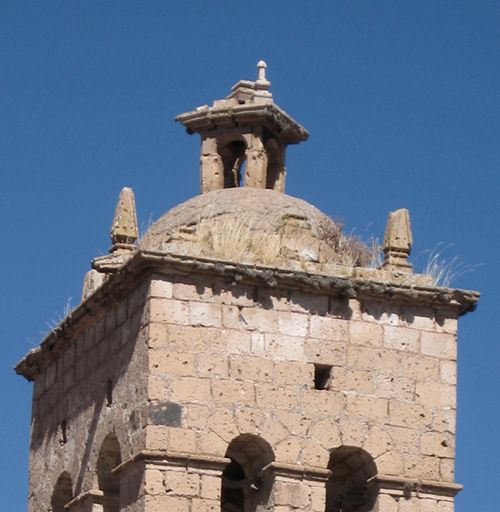
The normal practice when the Spanish conquered this part of the world was to destroy the indigenous temples and build churches or cathedrals in their place. They also built churches on or next to sacred sites, including this one (see the photo below). Note what is on the very top of the church. Some time ago a priest proposed removing the phallus from the top of the church but there was such a public outcry that this plan was abandoned.

One of the women on our trip purchased a postcard of the main phallus/altar to send to her husband. She asked for suggestions on what to write. I proposed  “Having a wonderful time, wish you were here”.

Share... Facebooktwitterredditpinterestlinkedinmail
« Older posts Newer posts »

© 2026 Salka Wind Blog

Theme by Anders NorenUp ↑