Posts on the Andean Cosmovision

Category: Uncategorized (Page 7 of 7)

Coming Home

Hi, I’m on a bit of hiatus from writing posts. My writing efforts right now are directed toward putting together a book based upon what I’ve written so far. I don’t want the Salka Wind blog to languish in the meantime, however, so I’ll continue to share what I can of salka and the Andean Cosmovision and the exploration of who we are as Beings in the Cosmos (put like that it sounds like a rather lofty goal).

About a month ago I returned home from another trip to Peru where I worked with don Americo and other mystics, p’aqos, healers and of course Peru itself. Coming home was hard on me. Perhaps it would be more accurate to say I made it hard on myself. I didn’t want to step out of the Andean Cosmovision and back into my western culture’s view of reality. After a couple of weeks, and fair amount of depression, I finally made the shift. It’s not bad, I’m glad I did, and I have learned something by looking back at what I went through during the transition.

My reluctance to return to my western perspective was based upon fear, a fear that in doing so I would lose what I had gained in Peru and simply return to how I was before I left. Silly me. That is never what happens, what does happen is that I return to my everyday life and to the everyday things I do, I go back to work, I go back to meditating at my favorite spot in the mountains, and then after a while I notice that I’m not like I used to be, I’ve changed in a way that leaves me often feeling happier to be on this planet and more enthusiastic to move forward in whatever-in-the-heck-it-is that I’m doing (“I don’t know what I’m heading for, but I’m going to head for it that’s for sure!”, Grateful Dead lyrics).

We don’t have to go to Peru to have this experience, every time we do one of the Andean meditations we step into salka, it is just juicier in Peru, but small steps will get us to the same place as large ones. Whether in Peru or meditating in our back yard we move into our salka way of being, and then we return to our everyday, domesticated, way of being, and then our Being subtly integrates the two. I’ve come to realize that this Being, not the U.S., not Peru, is my home. Every time we meditate and then go back to our everyday life we take a tiny step toward home.

When I came back from Peru I was afraid that re-entering my everyday life would lead to my losing what I had experienced in Peru. The opposite of fear is love.

Share... Facebooktwitterredditpinterestlinkedinmail

How to Begin

The path to a greater experience of salka does not depend upon a specific set of beliefs, nor does it depend upon connecting with a certain teacher, it depends simply upon you, and Nature, and the Cosmos.

Of the three centers of your being the best place to focus your attention is in your munay. When light and energy grow in your munay then they also flow to your llachay and llankay.

Connect with Nature, connect with Nature, connect with Nature. Connect with the Pachamama, with the Apus, with the stars, with the trees, with the rivers tumbling down the mountain side, with the condor riding the thermals up into the clouds. The Andean Cosmovision gives you the freedom to do this, that is its main utility.

Connect through your munay, dance with Nature and the Cosmos, ayni will provide the music.

There are times to be on the right side and times to be on the left side; times to be feminine and times to be masculine; times to be your own mother and times to be your own father; times to operate from your intellect, times to operate from your heart, and times to operate from your body; there are times to engage in the dance and times to withdraw and gather your energy. You are not the various facets of your being, you are the diamond, you can be found in the profound silence of the Cosmos.

Share... Facebooktwitterredditpinterestlinkedinmail

The Man with the Shining Eyes

One day don Americo and I were driving between villages in the Andes in his son Gayle’s red Volkswagen beetle (the car’s name is Pinky Pinky). As we were were working our way up the side of a mountain valley Americo pulled the car to a stop by the side of the road. An old man was sitting there with his back to us, looking out over the valley.

When we drive through the Andes Americo brings a sack of small loaves of pocket bread to hand out to the salka children we pass in the remote countryside. Americo handed me a loaf and told me to give it to the old man. I rolled down my window and called out a friendly greeting to him but he didn’t turn around. I looked back at Americo and he gestured for me to get out of the car and hand it to him directly. So, I got out of the car and walked over and spoke gently to the old man, who turned, gave me a very nice smile, and accepted the bread before turning back to consider the valley some more. What caught me, however, was not his smile as much as his eyes. They were clear, and serene, and glistened in the sunlight.

As we drove away Americo told me that he had first noticed the man sitting there about ten years earlier, and that he was always there every time Americo drove past this remote spot. Americo began stopping to give the man bread, or fruit, or a bag of flour or sugar. Every time the man would not come to the car, but would accept the gifts with a smile, and then go back to looking out over the valley and to the mountains beyond.

Share... Facebooktwitterredditpinterestlinkedinmail

Ayni Revisited

Ayni is, perhaps, the most fundamental principle of the Andean Cosmovision (please read the earlier post on ayni). It does not fall easily into Western thought, for it is essentially about relationship while we in the West tend to focus on outcomes. Ayni is about a balance between giving and receiving; between people, between people and Nature, and between people and the Cosmos (in a way that is hardly conceivable within the Western world-view of the basic inanimate nature of the Cosmos). Ayni is the organizing principle for the flow of energy in the expanded view of reality of the Andes.

In this post I would like to focus on the ayni between you and me, and between our culture and the Andean people. Let’s first consider ayni between you and me. It would be great for me to receive something back for the effort I put into this web site, but only if it has value for you. If you would like to participate in a relationship of ayni please make a donation on the Donate page. I have no recommended amount in mind, it rather depends on the value to you of what I have made available on this site and your financial circumstances.

After covering the minimal costs of maintaining the domain name and having Salka Wind hosted on a server I give 50% of what I get from my classes and presentations, and from donations, to the people of the Andes as ayni for what they have given us. I usually give the money in person to people in Peru, in ways that I think will nourish the traditional Andean culture and our relationship with that culture. This is almost always done in a context where asking for a receipt just wouldn’t be appropriate. I have hesitated on this web site to be so specific about what percent of the donations I give back to the people of Peru for ayni as I have no receipts to back it up, nor will I in the future, so please be aware of that.  The other 50% I use to defer my costs for going to Peru, or to have a beer, but mainly it is the effect it has on me to receive support for sharing what I can of the Andean Cosmovision with the people of my culture.

Giving to the Andean people in a way that both benefits them personally and nourishes their culture is a very important practice of ayni. You can bypass me and do this in a number of ways if you would like. Please see the Resources page of Salka Wind for a couple of options.

To keep this post from being too serious I would like to share a snippet from the delightful book Zen Without Zen Masters by Camden Benares (already referenced in the earlier post ‘Fallacies‘). Ho Chi Zen used to keep a careful watch on which of his students put money in the donation bowl before each of his classes. Any student who donated three times in a row was dismissed for being too gullible.

Oakley and the Club of Mothers

Oakley and friends and the Club of Mothers


Share... Facebooktwitterredditpinterestlinkedinmail

Phalluses

On a lighter note…

On the same trip (organized by Carla Woody) in which we visited Killarumi (a place of feminine energy) we also visited a place of male energy. It consists of one large phallus (visible in the photo) with a place to put offerings and a score of smaller phalluses. Some of the latter have been planted head down to balance the flow of energy in both vertical directions. Andeans still visit this ancient site to give offerings and meditate when they need to revitalize their sexual energy.

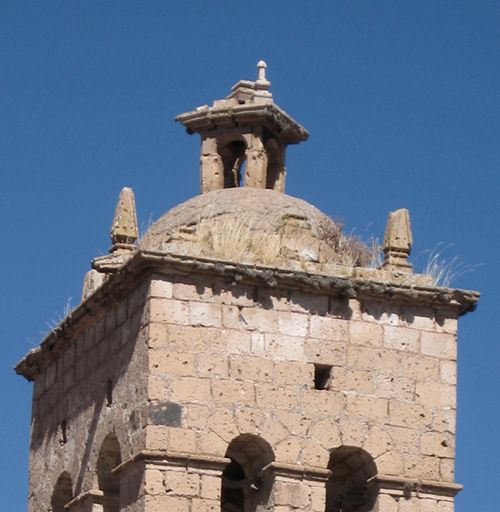
The normal practice when the Spanish conquered this part of the world was to destroy the indigenous temples and build churches or cathedrals in their place. They also built churches on or next to sacred sites, including this one (see the photo below). Note what is on the very top of the church. Some time ago a priest proposed removing the phallus from the top of the church but there was such a public outcry that this plan was abandoned.

One of the women on our trip purchased a postcard of the main phallus/altar to send to her husband. She asked for suggestions on what to write. I proposed  “Having a wonderful time, wish you were here”.

Share... Facebooktwitterredditpinterestlinkedinmail
Newer posts »

© 2026 Salka Wind Blog

Theme by Anders NorenUp ↑